Digital skills at school: how to move from use to creation
The 2026 INVALSI assessment indicates that digital content creation is the most challenging area for students. IMDEA proposes a newsroom workshop with SocialStation and Thinks4 to help students practise these skills in the classroom.
What the INVALSI data tell us
In the second year of upper secondary school, more than nine students out of ten reach the expected level in the areas of “information and data” and “communication and collaboration”. Digital content creation is the area with the highest share of students below the expected level.
Read the INVALSI assessment results: https://www.invalsi.it/competenze-digitali-rilevazione-invalsi/
Based on the European DigComp 2.2 framework, the assessment evaluates four areas. The three mentioned above are joined by safety in the use of technology. In the final year of upper secondary school, the share of students reaching at least the expected level is higher in all four areas. The largest difference is in content creation. The comparison involves different groups of students. Results also vary according to geographic area and the socioeconomic and cultural background of students’ families.
How does a student newsroom work?
“What would we change in our neighbourhood to make it more accessible to young people?” A second-year upper secondary class might start by looking at how difficult it is to get to the library after school. Students check bus timetables, gather first-hand accounts and share what they have discovered in an article or podcast.
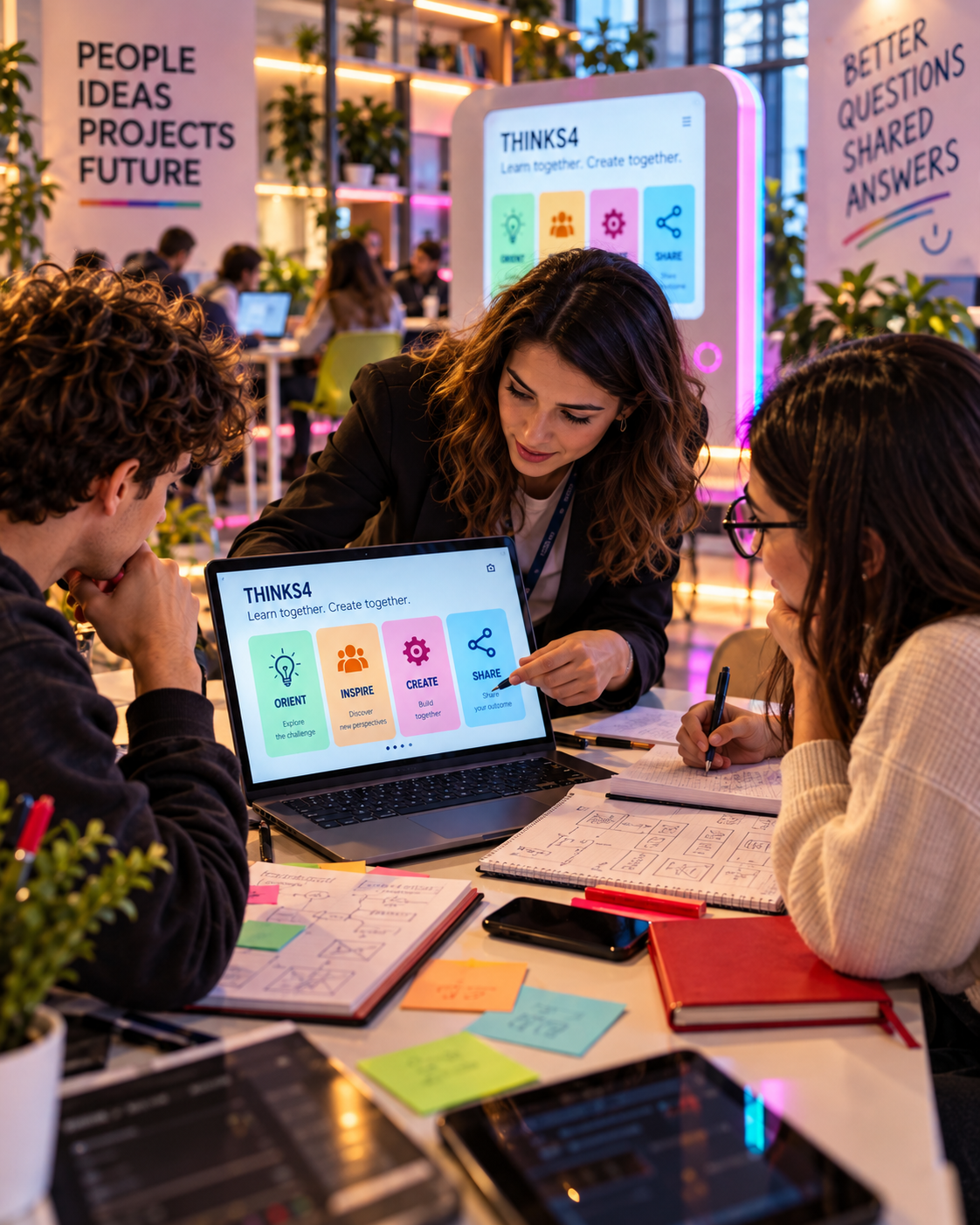
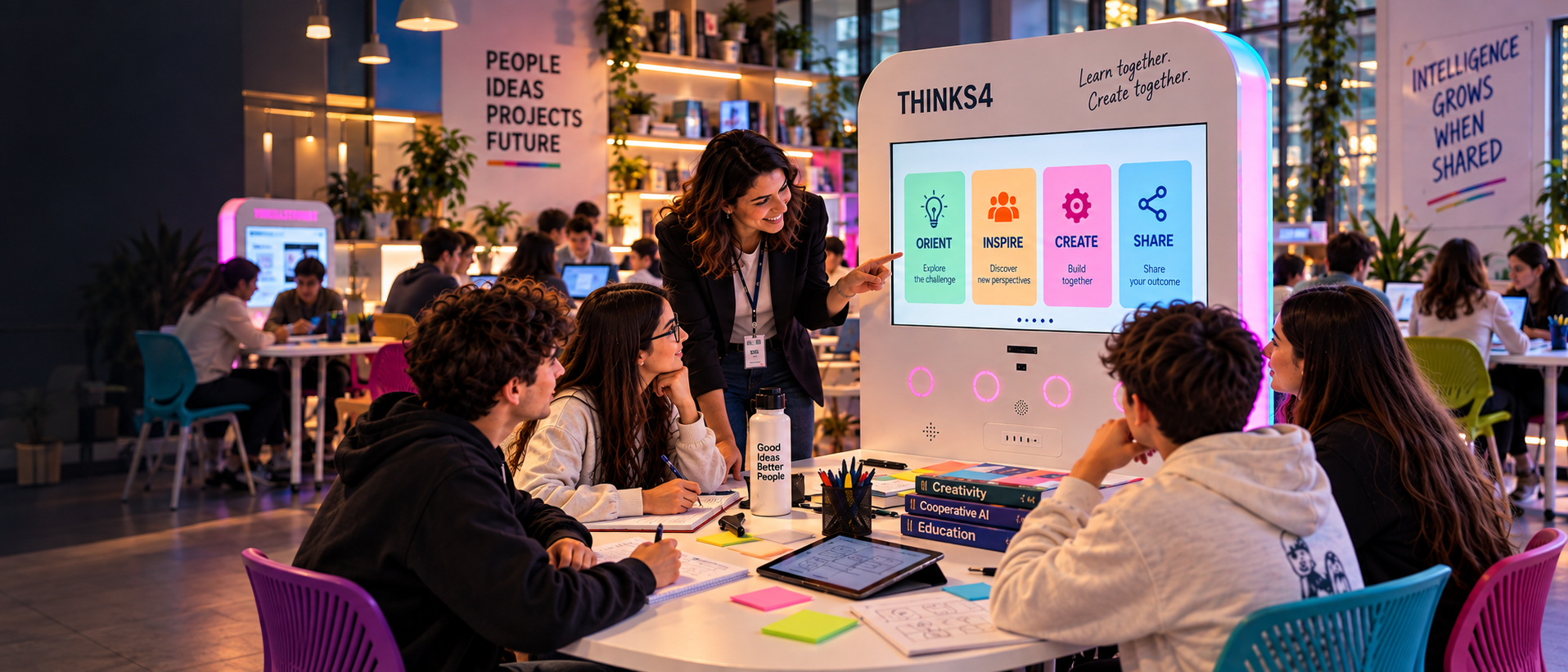
In IMDEA’s proposal, SocialStation is the collaborative workstation where the newsroom comes together to compare sources and review its work. Thinks4 guides the group through four steps.
• Orient. The class clarifies the question, decides who it is addressing and identifies initial sources.
• Structure. Students assign roles, prepare interviews and plan an outline.
• Experiment. The newsroom compares first-hand accounts with public sources, prepares a first draft and reviews it together.
• Share. The group checks sources, credits and permissions for voices and images, then presents its work and explains its choices.
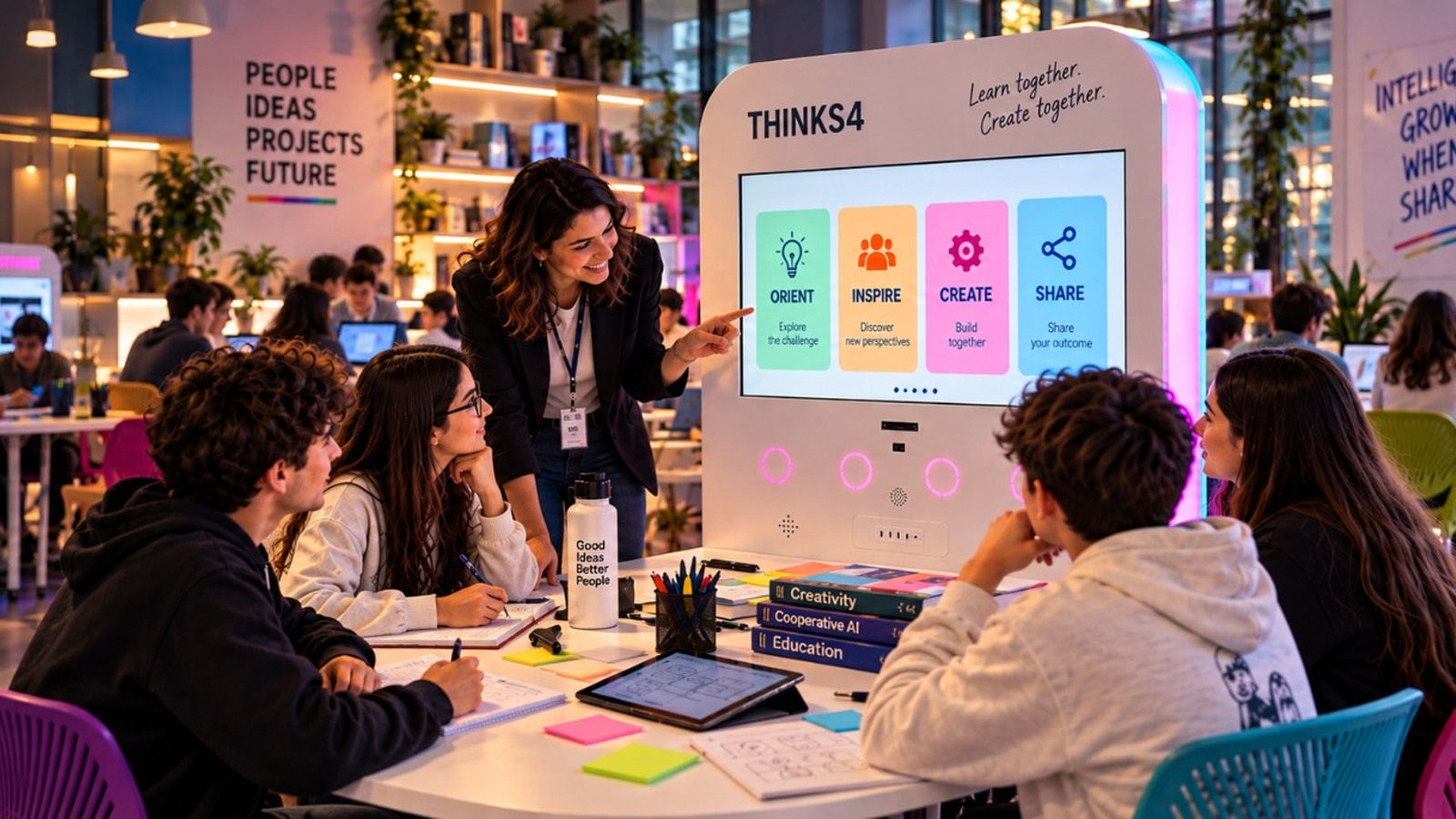
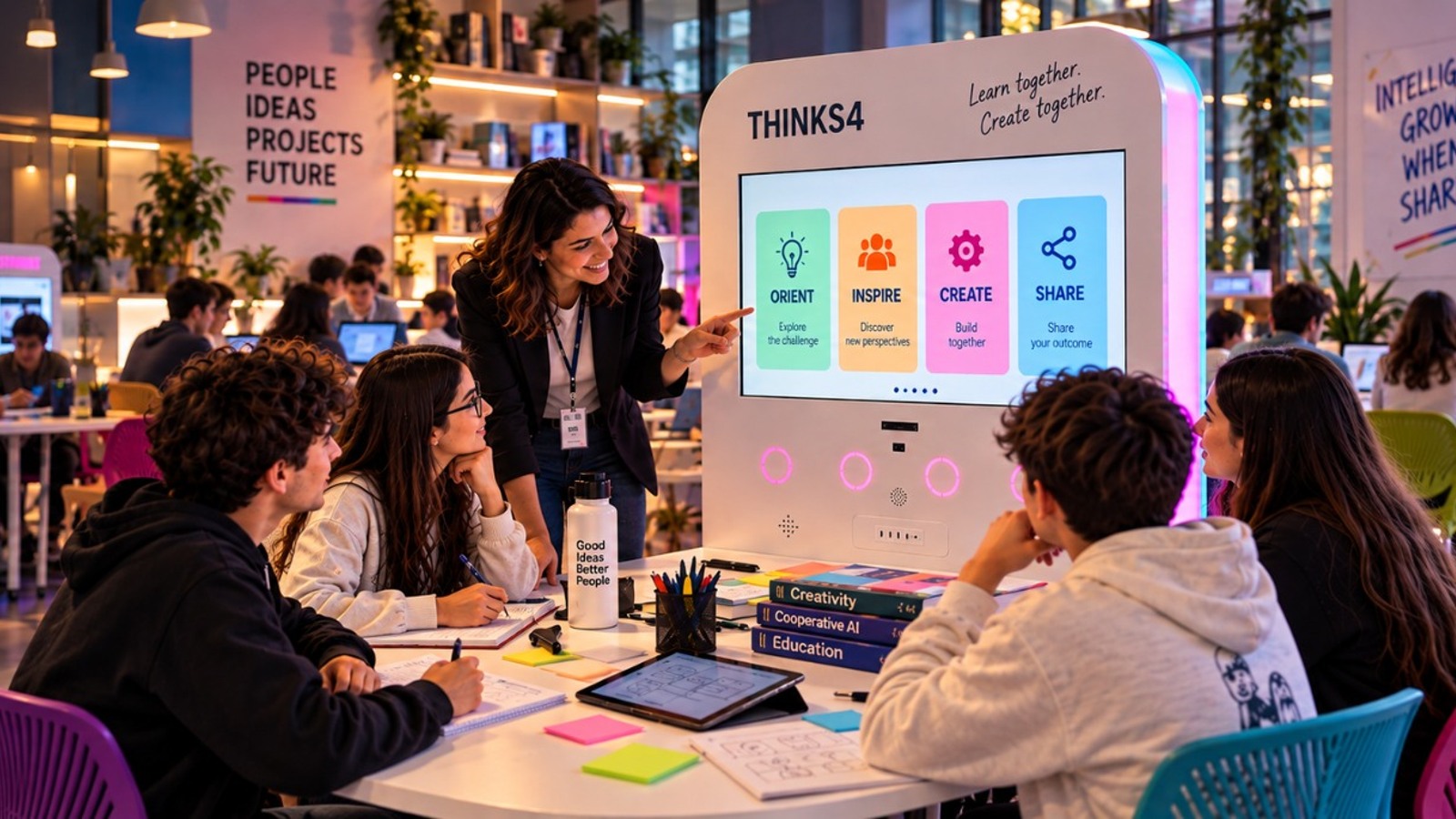
Students working together around the SocialStation workstation with Thinks4. Illustrative image from the official SocialStation website.
How does artificial intelligence come into play?
Thinks4 integrates AI agents designed to reduce cognitive load and support the group in areas where it lacks a particular skill. If the newsroom is finding it difficult to organise interviews, it can start with an outline suggested by AI. Students compare it with their notes, check that it reflects the meaning of the accounts they have gathered, and decide which suggestions to keep or revise.
Teachers can observe three aspects during the activity.
• Sources. Can the group say where a piece of information came from and how it verified it?
• Collaboration. What did each person contribute to the final version?
• Use of AI. Can students explain why they changed the suggested outline?
Next Gen AI Summit Naples 2025
At the 2025 Next Gen AI Summit in Naples, promoted by the Ministry of Education and Merit, SocialStation® and Thinks4® presented a collaborative approach to AI in education. In the video, students, teachers and school leaders explore how a shared workstation can be used to learn, collaborate and create together.
“Before putting on the headsets, we learned to look each other in the eye” sums up the experience.
Watch the Next Gen AI Summit video on YouTube

Design a student newsroom with us
If you teach, lead a school or coordinate an educational project, tell IMDEA which class you would like to involve and what topic you would like them to explore. We’ll start there to design the first workshop, choose the content to create and define the skills to observe.
Design a workshop with us
Source
INVALSI, Beyond the screen: What the first INVALSI data tell us about digital skills, 10 November 2026, National Assessments section.